A BOLD SPEECH BY MODI IN HOUSTON STADIUM.........

India's Narendra Modi and Donald Trump visit Houston.........


US President Donal Trump has joined a rally in Texas to welcome Indian Prime Minister Narendra Modi, who is visiting the US - a rare mass showing for a foreign leader on the American soil despite trade tensions between the two countries.
Nearly 50,000 Indian Americans and Non-Resident Indians gathered at Houston city's NRG Stadium on Sunday for the " Houdy Modi" rally hosted by Hindu nationalist Modi's supporters in the US.
Outside the stadium, thousands of people protested against Modi over the alleged human rights violations in Indian-administered Kashmir  and other places targeting India's minorities, including Muslims, who make up about 170 million of India's 1.3 billion population.


'Article 370 decision troubled some'

"Howdy, my friends," Modi said as he began his address. "When you say 'Howdy, Modi', my answer is that everything is fine in India."
With Trump watching in the front row and listening to the translation, Modi said he was "seeking equal status and development" for Kashmir, whose partial autonomy provided under Article 370 of India's constitution was scrapped last month.
Following the revocation of Article 370, Modi's government launched an unprecedented security clampdown on the region and arrested thousands of people, including senior politicians and activists.
Internet and mobile connections have remained suspended in the Kashmir valley since August 5, inviting criticism from the human rights groups.

"These people have put their hatred of India at the centre of their political agenda," said the 69-year-old Indian leader, without naming Pakistan."India's decision on Article 370 has troubled some people, who can't manage their own country," he said in a clear reference to Pakistan, which controls part of Kashmir and has sought to rally international attention over the disputed territory.
"Whether it is the 9/11 in America or 26/11 in Mumbai, where are its conspirators found? Not just you, the whole world knows who these people are."
Osama bin Laden, who masterminded the September 11, 2001 attacks, was killed by US forces in Pakistan's Abbottabad in 2011. The November 26, 2008 attacks in Mumbai, in which 166 people were killed, have been blamed on Pakistan-based Lashkar-e Taiba group.

Modi, Trump praise each other

At the rally in Houston, the two leaders, who call themselves nationalists and are fond of fiery rallies, heaped praise on each other in an unusual joint appearance inside the football stadium.
To the beats provided by "bhangra" drummers in saffron turbans, Trump in his dark suit and Modi in a yellow kurta and vest made a grand entrance with arms clenched together to ecstatic cheers from a crowd.
Modi said he admired Trump for his "sense of leadership" and "strong resolve to make America great again".
"From CEO to commander-in-chief, from boardrooms to the Oval Office, from studios to the global stage…he has left a lasting impact everywhere," Modi said, with the US president standing by his side.

"We are committed to protect innocent civilians from radical Islamic terrorism," said Trump, prompting a loud cheer from the audience - including Modi - who stood up from their seats."We are proud to have you as Americans. We thank you, we love you, and my administration is fighting for you every day," the US leader said.
"We are committed to protect innocent civilians from radical Islamic terrorism," said Trump, prompting a loud cheer from the audience - including Modi - who stood up from their seats.

OYO IN TALKS WITH LPU TO BUY IT'S ASSETS OF RESIDENTIAL BUILDINGS


OYO to buy Lovely Professional University's hostel assets for $200 million..............


In an interesting development, OYO Hotels and Homes is on the verge of taking over the student residential facilities of Lovely Professional University in Punjab. It is reported that the talks are at an advanced stage and that the deal could be worth $200 million.
Owned by Mittals, Lovely Professional University is considered one of the largest in the country with a huge campus. The hostels with a range of accommodations starting from dormitories to single occupation rooms can house more than 25,000 students. The facility could include apartments too for senior students or faculty. Besides, there are gyms and an indoor stadium even.
Though there were other bidders for this asset, Oyo beat them all, it is reported. Among the others who wanted to take over this asset are HDFC, Good Host Spaces, a startup funded by Goldman Sachs and Blackstone. Either Oyo outbid them all or the Mittals felt comfortable dealing with Oyo. Neither parties have issued any official statement. The deal could be in the form of a lease and the period of lease could be quite long, running into a few decades.


The promoters are likely to utilize the funds generated from this deal to further expand the university.
The only issue being pointed out by those who are knowledgeable about this deal point out that the university management may retain the authority to decide on the rent and other charges being collected from the students by Oyo. This might restrict the legroom available to Oyo. The report gives out certain figures. It is said the facilities generated a net operating income of $23 million last year and an overall gross revenue of $30 million.
Oyo already has a model of managing rental accommodation for the youth and professionals with its Oyo Life brand and this massive addition of a student accommodation facility can open another avenue for it. There are other players like Stanza Living and Oxfordcaps in the student accommodation space both being startups. According to one study, the business for providing student accommodation in Indian universities can be put at around $50 billion and there is still a large demand-supply gap to be filled. Oyo may gave taken a huge stride forward in that direction with this LPU deal.
For Oyo last valued at $10 billion, this business comes on the heel of several new additions to its portfolio, the last high profile one being the acquisition of Hooters Casino Hotel in Las Vegas.


WATER CRISIS IN INDIA.....

India’s water crisis: The clock is ticking.............


Photo: Getty Images
India is facing one of its major and most serious water crisis.
After two consecutive years of weak monsoons, 330 million people — a quarter of the country’s population — are affected by a severe drought. With nearly 50 per cent of India grappling with drought-like conditions, the situation has been particularly grim this year in western and southern states that received below average rainfall.
According to the Composite Water Management Index (CWMI) report released by the Niti Aayog in 2018, 21 major cities (Delhi, Bengaluru, Chennai, Hyderabad and others) are racing to reach zero groundwater levels by 2020, affecting access for 100 million people.
However, 12 per cent of India’s population is already living the 'Day Zero' scenario, thanks to excessive groundwater pumping, an inefficient and wasteful water management system and years of deficient rains. The CMI Report also states that by 2030, the country's water demand is projected to be twice the available supply, implying severe water scarcity for hundreds of millions of people and an eventual six per cent loss in the country's GDP.
The Union government recently formed a new Jal Shakti (water) ministry, which aims at tackling water issues with a holistic and integrated perspective on the subject. The ministry has announced an ambitious plan to provide piped water connections to every household in India by 2024.
The ministry has set a tough target at a time when hundreds of millions don't have access to clean water. Aiming at laying huge pipeline networks for water supply means that yet again, we are giving more preference to infrastructure. Also, the moot questions are: what will happen if there is no water to supply? What will happen to all the wastewater that gets generated?
This indicates that there is a clear disconnect between water, society and economy. Currently, we are interested in laying large networks, constructing huge storage dams, fetching water from 150 kilometres and above, which involves a huge carbon footprint.
We are valuing land more than water, neglecting our local water bodies, which have either gone dry or encroached. Also, in many Indian cities, water is not properly distributed Some areas of mega cities like Delhi and Mumbai are privileged to get more that than the standard municipal water norm of 150 litres per capita per day (lpcd) while other areas get 40-50 lpcd.
Aggravating the problem is that the water being supplied currently is of drinking water standards.
The World Health Organization (WHO) states that an individual requires around 25 litres of water daily for meeting his/her basic hygiene and food needs. The rest is used for non-potable purposes like mopping and cleaning. This indicates that for most of the non-potable uses, a quality lower than drinking water is required. Thus, for economic efficiency and environmental sustainability, water must be treated and supplied according to usage.
To top this, are issues of leakage losses, water pricing and metering of water. Lack of proper maintenance of existing infrastructure causes further losses of almost 40 percent of piped water in urban areas.
The road ahead
Looking at the current situation, there is a need for a paradigm shift. We urgently require a transition from this 'supply-and-supply-more water' provision to measures which lead towards improving water use efficiency, reducing leakages, recharging/restoring local waterbodies as well as applying for higher tariffs and ownership by various stakeholders.
A recovery-based closed loop system is the need of the hour.
It is time to go back and start using our traditional practice of rainwater harvesting — catching water where it falls. Presently, India captures only eight per cent of its annual rainfall, among the lowest in the world.
Another aspect is the treatment and reuse of wastewater. About 80 per cent of the water that reaches households, leaves as waste and pollutes our waterbodies and environment. There is a huge potential in reusing and recycling this treated wastewater at least for non-potable purposes, which is cost effective. 
All this leads to the fact that we need to promote a decentralised approach, with a key focus on water conservation, source sustainability, storage and reuse wherever possible.
It is important to understand that managing the water situation is not the job of only engineers but all stakeholders including hydrogeologists, economists, planners and most importantly, communities themselves.
Emphasis on behavioural change is not getting enough attention because it is nuanced and complex. But locals/citizens/ communities have a huge part to play. By keeping in check our own usage and actions, we can contribute.

ALARMING & THREAT BY THE NATURE.............


AMAZON FOREST FIRE

The Amazon rainforest is the green-heart of our planet. It has more than 16,000 species of trees, most are exclusive to here alone.
The Amazon is home to a tenth of the world’s total diverse plant and animal species. Amazon does more than what our eyes can see.
The Amazon rainforest is an essential Carbon Compressor that plays a very vital role in slowing down the pace of global warming.
It produces more than 20% of the world’s oxygen. Despite all the conservation efforts, the Amazon forest is being erased at an unparalleled scale. In fact, deforestation has rapidly increased several folds since the last few months in the name of development in Brazil.

Why are the forest fires increasing in the Amazon :
According to the new data from the National Institute for Space Research [INPE], Amazon forest fire have been on a record high this year.
This year’s satellite data revealed a shocking fact, it showed an 83% increase in forest destruction by wildfires compared to the same period in 2018.
Amazon forest fire
Wildfires in the Amazon are sparsely common during the dry season in Brazil as the forest itself is mostly fireproof. The humidity, moisture, and wetness of the forest suppress the possibility of wildfire.
However, natural wildfires are inevitable in the dry season. But the recent blazing forest fires are mostly deliberate in an effort to illegally deforest and clear the land for cattle breeding in the name of development (or) its least accidental.
Head of the World Wide Fund For Nature [WWF], Ricard Mello said that the fires were a consequence of an increase in the deforestation seen in recent figures.
Environmental activists blame president Jai Bolsonaro saying he has inspired loggers and farmers to clear the forest.
Scientists from Brazil’s National Space Research Institute [INPE] said that the Amazon has suffered a massive loss at an accelerated pace since Mr. Jair Bolsonaro took office as the president in January.
Mr. Jair Bolsonaro denied the latest data saying that it was the “Season of the Quemado” when the farmers use fire to clear land.
But INPE strongly stood to its reports claiming that its data was 95% accurate. And it was backed up by several scientific institutions including the Brazilian Academy of Science.
However, INPE noted that the pattern and the total number of fires weren’t in line like usually reported during the dry season.
Amazon deforestation was reduced over the past decade by the previous Brazilian Government with a strong system of penalties and action by feds on Environmental Crimes.
But according to the INPE environment reports, it seems that the present government has criticized the penalties, convictions for environmental crimes and encouraged the exploitation of the rainforest.

Consequences of the destruction of Amazon rainforest :

According to the National Institute for Space Research’s harvested data, approximately 870 sq.miles of the Amazonian forest were destroyed by man-made fires in July which is a 278% increase in the destruction of forest during the same period in 2018.
Amazonian forest destruction
The smoke from the massive fire caused a ‘Blackout’ in the entire city of Sao Paulo on Monday afternoon.
The ‘blackout’ which lasted for an hour was a result of the strong winds that carried in smoke from the forest fires that were blazing in the states of Amazonas, Rondonia which were more than 2,700 km [1,700 miles] away from the city.
According to Euronews, the largest state of Brazil, Amazonas, had to declare a state of emergency due to the raging fire and toxic smoke.
The Amazon forest fire in Brazil will have a deadly impact on climate change. Millions of hectares of forest burned to ashes. According to experts, this will directly affect global warming by accelerating the pace of rising temperature as millions of tons of Co2 is released into the atmosphere that traps the heat. This, in turn, increases the sea level by melting the ice caps.

GOOD BYE VIKRAM LANDER

ITS TIME TO SAY OUR LANDER (VIKRAM) AND ROVER (PRAGYAN).............

According to INDIA TODAY, a cold night will soon descend the Lunar surface and will mark an end to the Vikram lander's journey on Saturday, September 21.  

Chandrayaan 2
Source: India Today

Chandrayaan-2's Vikram lander lost contact with the Indian Space Research Organisation (ISRO) on September 7 and since then all efforts to revive the lander have been unsuccessful. 

The orbiter though is performing well and continues to orbit the moon, as part of the mission. 

Vikram lander representation
Vikram lander lies on the Moon's surface where a wintery night will ascend soon and the temperature is expected to fall to less than minus 200 degree Celsius. 

There's no way the instruments on the lander will survive the cold lunar night, meaning it is time to bid goodbye to Vikram Lander. 
Lunar surface

ISRO was hopeful of controlling the situation but now official sources claim re-establishing communication with the Vikram lander, which houses the six-wheeled Pragyaan rover, is not a possibilites.
While a team of national level scientists and academicians will soon sit together to probe and discuss the reasons for Vikram lander's failure, we citizens can just laud ISRO's efforts and wish that the lander will survive another day in other mission which will soon be launched by ISRO.......

PROMINENT ACTRESS BRUTALLY TROLLED IN A REALITY SHOW. (KAUN BANEGA CROREPATI)


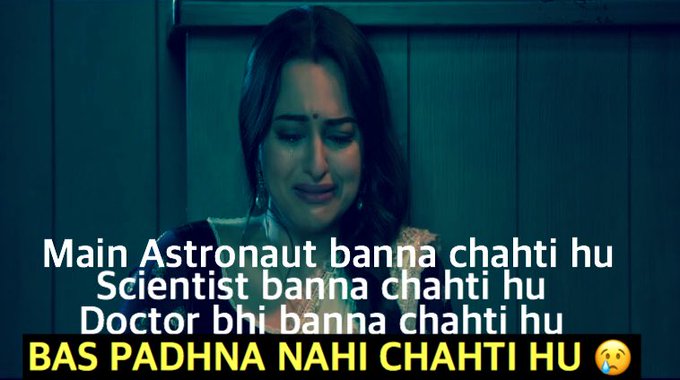
Sonakshi Sinha schooled by Amitabh Bachchan on KBC, trolled for not knowing about Ramayana. See funny memes


Sonakshi Sinha is the new target of trolls after she made two wrong guesses for a question on Ramayana during her appearance on Kaun Banega Crorepati.


Actor Sonakshi Sinha, who appeared on game show Kaun Banega Crorepati recently, found herself at the target of not just internet trolls and meme-generators but even the show host Amitabh Bachchan. She made two wrong guesses when Amitabh asked her a question on Ramayana, before making the final and correct guess on the show. After the internet was abuzz with memes cracking jokes at her GK, Sonakshi has responded with a tweet, asking for more memes to be made.
Sonakshi appeared on Friday’s episode of KBC 11 to support and help a contestant from Rajasthan . During the show, she was asked, “According to Ramayana, Hanuman fetched the Sanjeevani booti (herb) for whom?” She got confused between four options - Sugriva, Lakshmana, Sita and Rama. The actor took a lifeline to answer the particular question and for the same, she faced a backlash from the netizens on Twitter. Hashtags #YoSonakshiSoDumb was among the top India trends on Twitter on Saturday.
Even Amitabh could not restrain himself from schooling the young actor. “Aapke pitaji ka naam hai Shatrughan, aap jis ghar me rehti hain, uska naam hai Ramayana.Aapke jitne chacha hain, wo sab Ramayan se sambandhit hain, Aapko ye nahi pata ki Lakshman ke liye laaye they jadibooti? (Your father and uncles names are derived from Ramayan, you live in a house called Ramayana. How you not know for whom did Hanuman bring Jadibooti?)” To which Sonakshi replied, “Mujhe laga tha, lekin mai inke liye bahut nervous thi to chance nahi lena chahti thi (I thought it should be Lakshman but did not want to take any chance).” Sonakshi’s mother Poonam Sinha laughed through the entire discussion as she sat among the audience.
MEMES

View image on Twitter


View image on Twitter
One of the users shared a hilarious still from Dabangg featuring Sonakshi and Salman Khan and wrote, “Thappad se dar nahi lagta sahab dar KBC ke questions se lagta hai.”
Another user shared a series of pictures on Twitter with one from the show and the other from the film Hera Pheri. “Just a scenario why Bollywood is considered crass and brainless..... Sonakshi Sinha requesting lifeline for this question is justifying that...” he wrote.
“Shatrughan Sinha (with brothers Ram, Lakshman, Bharat and sons Luv and Kush who all live in the home called Ramayana) after #sonakshisinha ‘s answer in #KBC11 #KBC,” chimed another user while sharing a GIF which said, “Are you serious right now?”

MEE TOO MOVEMENT......

INDIA STAND AGAINST ABUSEMENT AND SEXUAL HARRASSMENT DONE WITH THE GIRLS.......


History of Me Too Movement
The Me Too movement was conceptualized by Tarana Burke. It became a media sensation when an exposé was aired against Harvey Weinstein on countless allegations.  Following the expose publication, more than 50 women have come out stating that Weinstein sexually assaulted them (Evans, 2018). Alyssa Milano, an actor and vocal critic of Weinstein came out on social media on October 15, 2017, with a call for people to tweet “me too” as a status to give magnitude to the matter. The result of that tweet led to women opening up about their personal stories of sexual abuse. Women used social media to disclose their harassment and abuse. They included public figures and celebrities like Olympic Gymnast McKayla Maroney. It led to a conversation about the imbalance of power and men’s behavior. Me Too raised over 12m posts on Facebook, Twitter, Snap chat and other social media platforms as people reacted to the # me too challenge(Onwuachi-Willig, 2018). This paper will expound on the Me Too movement by discussing its conception, objectives, and dangers it poses to the societal establishment.
Purpose of the Me Too Movement
  1. Changed laws and policies
The movement came out to give people the resources they needed to find healing and advocate for changes to laws and policies. Some states have changed legislation to extend the statute of limitations allowing victims to file a civil lawsuit to bring their abusers to justice. Some victims could not get justice after failing to report the incident several years after it took place. States are now improving the law by extending the time frame that victims have to file a lawsuit against their perpetrators. An example is being derived from the recent revelations involving the Catholic Church whereby people who were abused as children are coming out to talk about their harrowing experience. State legislatures have begun to police themselves after several of their colleagues have resigned following accusations of sexual harassment. Additionally, most states have a written policy that guards against inappropriate sexual behavior especially with skewed power dynamics they are now paying attention to this policy. Legislators are now involving lobbyists to critically examine sexual harassment in their own industry.
  1. Teach children to report predatory behavior
Most of the children who are sexually abused will not tell anyone about it and might keep it as a secret the whole of their lives. Sexual abusers are usually people they know too well and love, making it difficult for children to report them. The closer the relationship, the harder it becomes for them to open up. Children will always give vague hints about what is happening to them, it is essential for the parents to look out for the warning signs. Parents are now empowered by the Me Too movement to support their children and show them the love they deserve so that it can be easier for them to open up. They have begun to teach them how to detect people with predatory behavior and how to avoid them. Parents have learned how to speak up once they discover that their children have been sexually abused and bring their perpetrators to justice.
  1. Help fight sexual harassment and violence in the workplace.
Sexual harassment figures continue to rise in the workplace even after some refuse to report it. Sexual harassment in the work environment was illegalized in 1964 after the passing of the Civil Rights Act, Title VII barring employment discrimination (Fitzgerald and Cortina, 2017). However, sexual abuse cases continue to be reported. After the uproar of #me too movement, employers have stepped up to put in place anti-harassment policies that seek to protect employees from harassment. They are conducting anti-harassment training to educate their employees on what to do if someone abuses them and where to report.  Sexual harassment training is regarded as an effective mechanism for avoiding sexual harassment and mitigating its effects as it educates employees on their responsibilities, appropriate behavior and increases employee’s sensitivity to sexual harassment issues (Bainbridge, Perry, and Kulik, 2018). To prevent future harassment, more employers are taking up stern measures against offenders by firing perpetrators of abuse. Business executives are publicly communicating about inappropriate behavior not being tolerated in the workplace since sexual harassment affects the people negatively in their productivity, morale and employee turnover. McDonald, Charlesworth, and Graham (2015) indicate that sexual harassment has contributed to occupational stress, team conflict, absenteeism, and reduced workforce morale.
  1. Non-disclosure Agreements
Serial sexual harassers have over the years used nondisclosure agreements to continue abusing their victims. For instance, Movie Producer Harvey Weinstein and other politicians have used nondisclosure agreements to harass multiple victims. In many instances, the agreements have been transformed into financial settlements with the aim of compensating the victims and barring them from speaking about sexual abuse or harassment. However, many states including Arizona, New York, Vermont, Washington, Maryland, and Tennessee have come out to tweak nondisclosure agreements to limit how they ought to be used in harassment claims.
Dangers of Me Too Movement
  1. Sexual Freedom
The disadvantage of the Me Too Movement is that it threatens sexual freedom. Some men are being accused and forced to confess to crimes they have not committed. Women are also being forced to come out and talk about their experiences and those who don’t are regarded as traitors. Due to the prevalence of the Me Too challenge, some men are unwilling to work with women for fear of being falsely accused of sexual harassment. There is also the worry that punishment for less sexual misconduct could be considered as that of severe offenses. It could lead to serious legal actions by people who have been accused falsely for having been perpetrators of sexual abuse.
  1. Gender and Race ratios
Every institution will be called upon to calculate the gender and race ratio before they hire or promote anyone. For instance, at the Oscar Awards, John Bailey who is the President of the Academy of Motion Pictures Arts and Sciences stated that the nominations would seek to balance race, gender and, religion come 2020. Managers who are forced to attain gender and race equity when selecting employees are apprehensive about this stating that the repercussion would be to employ less qualified employees. Financial institutions and banks are equally facing pressure from their shareholders to release data on the female employees at their upper ranks which could raise more questions about the balance between male and female employees. STEM (Science Technology Engineering and Mathematics) departments have been under pressure to observe gender and race when hiring employees. Despite the efforts of governments, foundations, and companies to sponsor an increase in the number of females in STEM, gender proportions have not improved over the years. It is attributed to the differences in interests and aptitude witnessed in both sexes. Female career choice is way different than that of their male counterparts.
  1. Shame
It takes a lot of energy for women to come out and talk about sexual abuse and harassment that has happened to them. Majority of the women who come out are afraid that they will be partly blamed for it. They are not sure whether they will receive support from their friends and family once they come out. Some are afraid that they will lose their jobs once their stories come to light. As much as many people come out and speak about their experiences, some vulnerable people may not feel they have the liberty to speak out. LGBT women, undocumented women, and women of color are facing exceptional risks each day and might be discouraged from speaking about their experiences. Regulska (2018) states that women vary in many ways from their diverse race to ethnicities and their intersecting identity markings makes it possible for some women to be more vulnerable than others.
 Conclusion
The Me Too movement was established with the aim of bringing a voice to marginalized people, but has moved on to help millions of people to speak out about sexual abuse and harassment. As much as the conversation has been continued elsewhere, a lot needs to be done as the movement has sparked more dangers than it anticipated. The conversation still lingers on how to verify sexual abuse several years after it has happened with legislatures moving in to amend the law. Women are being looked at differently in the workplace due to the Me Too challenge while others have reservations whether speaking out is the best course of action. Tarana Burke coined the term “Me Too” to provide a reprieve to women that have faced sexual harassment, there should be a way to offer healing to these individuals without people just shaming the perpetrators in the social media.

MOTOR VEHICLE ACT 2019

INDIA AMENDED MOTOR VEHICLE ACT........


 The Motor Vehicles (Amendment) Bill, 2019 was introduced in Lok Sabha on July 15, 2019 by the Minister for Road Transport and Highways, Mr. Nitin Gadkari. The Bill seeks to amend the Motor Vehicles Act, 1988 to provide for road safety.  The Act provides for grant of licenses and permits related to motor vehicles, standards for motor vehicles, and penalties for violation of these provisions.

Compensation for road accident victims: The central government will develop a scheme for cashless treatment of road accident victims during golden hour.  The Bill defines golden hour as the time period of up to one hour following a traumatic injury, during which the likelihood of preventing death through prompt medical care is the highest.  The central government may also make a scheme for providing interim relief to claimants seeking compensation under third party insurance.  The Bill increases the minimum compensation for hit and run cases as follows: (i) in case of death, from Rs 25,000 to two lakh rupees, and (ii) in case of grievous injury, from Rs 12,500 to Rs 50,000.

  • National Transportation Policy: The central government may develop a National Transportation Policy, in consultation with state governments.  The Policy will: (i) establish a planning framework for road transport, (ii) develop a framework for grant of permits, and (iii) specify priorities for the transport system, among other things. 
     
  • Road Safety Board: The Bill provides for a National Road Safety Board, to be created by the central government through a notification.  The Board will advise the central and state governments on all aspects of road safety and traffic management including: (i) standards of motor vehicles, (ii) registration and licensing of vehicles, (iii) standards for road safety, and (iv) promotion of new vehicle technology.
  • Taxi aggregators: The Bill defines aggregators as digital intermediaries or market places which can be used by passengers to connect with a driver for transportation purposes (taxi services).  These aggregators will be issued licenses by state  Further, they must comply with the Information Technology Act, 2000.


INDIA'S DECREASING GDP GROWTH


 India is among the top three strategic growth markets that companies turn to when looking   to expanding their global footprint and increase business success.

  • National Income Rank – 6th (nominal GDP); 3rd (GDP at PPP)
  • GDP of India – $2.454 trillion (nominal GDP); $9.489 trillion (GDP at PPP)
  • GDP growth rate – 7.2%
  • Per-capita Income Rank – 141th (nominal GDP); 123rd (GDP at PPP)
  • Per-capita GDP value – $1850 (N) ; $6,616 (PPP)
  • Inflation (CPI) : 1.54%
  • Sectoral contribution to GDP – Agriculture – 17.32% Industry – 29.02%, Services – 53.66%
  • Labour contribution to GDP – Agriculture – 47% Industry – 22%, Services – 31%
  • Main Industries- Software, Petroleum Products, Chemicals, Pharmaceuticals, Agriculture, Textiles, Steel, Transportation Equipment, Machinery, Leather, Cement, Mining, Construction
  • Total Export Value- $276.28 billion
  • Total Import Value- $384 billion
  • Export Goods- Precious metals (14%), Textiles (14%), Chemical products (14%), Minerals (12%), Machines (9%), Metals (8.1%), Transportation (7.6%), Vegetables (5.9%), other (15.4%)
  • Import Goods- Crude oil (18%), Machines (18%), Minerals (10%), Chemical products (9.8%), Gold (9.6%), Metals (6.9%), Diamonds (4.7%), Plastics (3.7%), Transportation (3.7%), other (15.6%).
  • India has sustained rapid growth of GDP for most of the last two decades leading to rising per capita incomes and a reduction in absolute poverty. Per capita incomes (measured in US $) have doubled in 12 years
  • But India has one third of all the people in the world living below the official global poverty line. It has more poor people than the whole of sub-Saharan Africa
  • Per capita income is $1,270, placing India just inside the Middle Income Country category
  • India's per capita income is 1/20th that of the UK
  • Life expectancy at birth is 65 years and 44% of children under 5 are malnourished. The literacy rate for the population aged 15 years and above is only 63% compared to a 71% figure for lower middle income countries.
  • Despite a strong attempt to become an open economy, exports of goods and services from India account for only 15% of GDP although this will rise further in the years ahead
  • India runs persistent trade and fiscal deficits and has suffered from high inflation in recent years
  • India's growth rate has slowed and high inflation is a constraint on competitiveness and growth.
  • Investments by Indian businessmen abroad have overtaken foreign direct investment for the first time – reflecting a lack of confidence among Indian entrepreneurs about their home economy.
                                  Growth and Development Limiters for India
  • Despite optimism for India's prospects for economic growth and development, there are a number of obstacles which may yet see growth and development falter.
    • Poor infrastructure - notably in transport and power networks
    • Low productivity and weak human capital. A high % of workers are low-skilled and work in small businesses
    • High inflation and a persistent trade deficit
    • Low national savings as a share of GDP, low share of capital investment
      • Relatively closed economy - India is a net importer of primary products.                             
      • Indian Development – An Infrastructure Gap
    • India is a good case study to use when discussing the problems that persist when a country cannot rely on adequate critical infrastructure such as roads, railways, power and basic sanitation. India wants to build $1 trillion worth of infrastructure in the next five years but the government expects the private sector to fund half of it – this is unlikely! Poor infrastructure hurts the Indian economy in numerous ways:
      1. Causes higher energy costs and irregular energy supplies for nearly every business and especially India emerging manufacturing sectors – there were huge power black outs in 2012
      2. It is more expensive to transport products across the country and it creates delays at ports hamper export businesses and delays at airports which increases the cost of international freight.
      3. It makes India less attractive to inward FDI
      4. It adds to the cost of living and limits the extent to which millions of India's lowest income families can escape extreme poverty
      5. A creaking infrastructure damages the reputation and potential of India's tourism industry.
      Despite these growth constraints, India's expansion far exceed.In a report on India in the Financial Times in 2012, it was claimed that
      “India's failure to adopt enough of the large-scale, labour-intensive manufacturing that has propelled the successful development of China and other east Asian countries is now regarded as one of the greatest weaknesses of the Indian economy."
      India's growth has been impressive in recent years but this is a country whose development is hampered by endemic structural problems. India requires significant investment in infrastructure, manufacturing and agriculture for the rapid growth rates of the last fifteen to twenty years to be sustained.

A BOLD SPEECH BY MODI IN HOUSTON STADIUM.........

India's Narendra Modi and Donald Trump visit Houston......... US President Donal Trump has joined a rally in Texas to welcome  In...